01
Britain’s oldest family business opens its homepage with a stock-photo carousel.
- Observation
- rjbalson.co.uk loads on mobile to a four-slide Elementor carousel showing generic meat-counter images, with the headline "Welcome to R J Balson & Son". The year 1515 does not appear above the fold. The Balson name (the family that has stood at the same counter for 25 generations) is not introduced. A first-time visitor cannot tell whether this is a five-year-old butcher or a five-hundred-year-old one.
- Revenue impact
- Every other butcher in West Dorset competes on price and provenance. Balsons compete on something none of them can ever buy back: 511 unbroken years on the same trade. That is the line that wins the customer choosing between Balsons and a chain. The homepage does not say it.
- Cause
- The Elementor builder defaults to a carousel-first home template. Whoever set up the site in 2020 picked the template and never overrode the eyebrow. The "Our History" page exists, deep in the nav, but the carousel never points at it.
- After rebuild
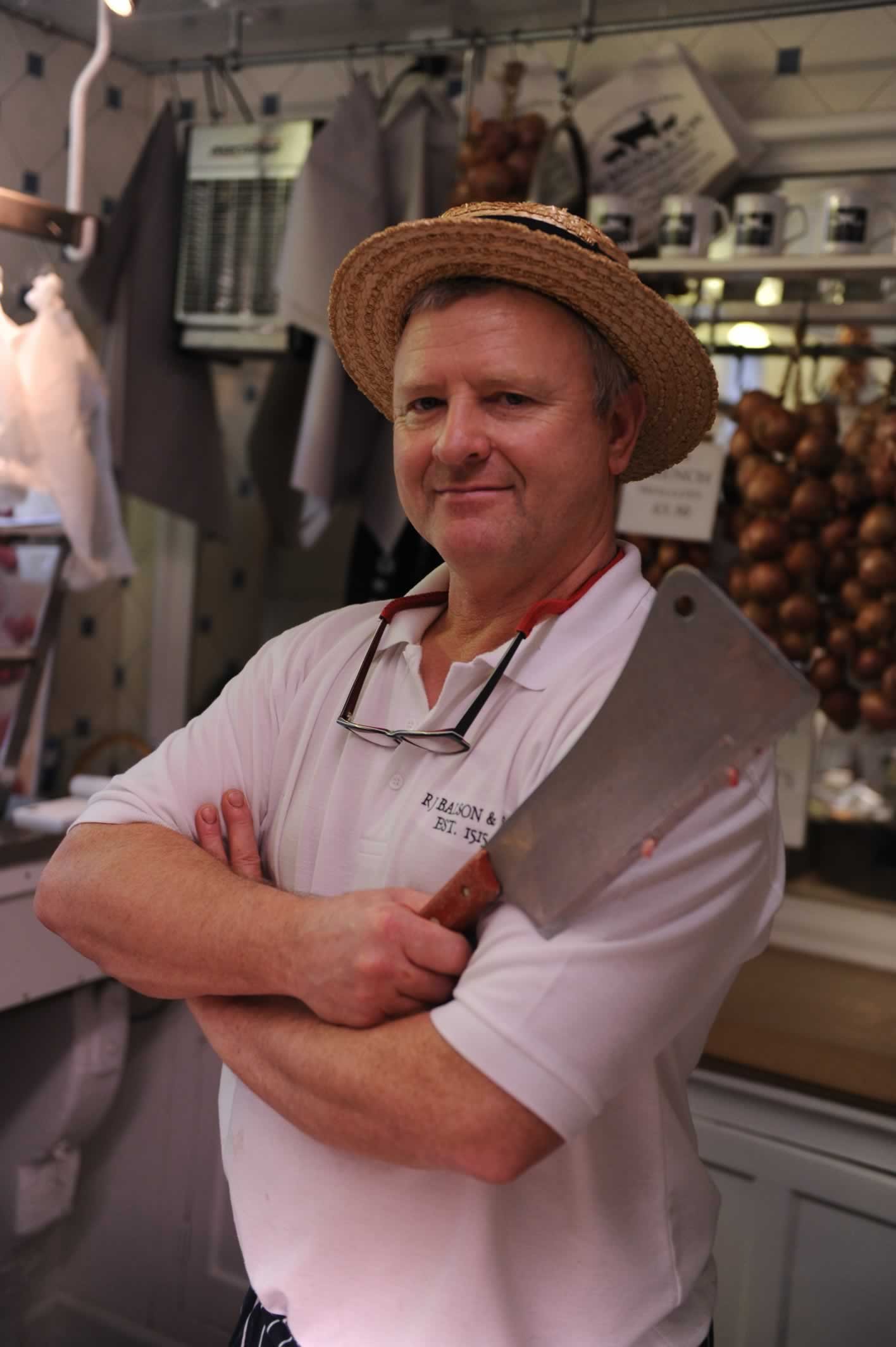
- The rebuild leads with 1515 as the first thing the eye lands on, the Balson name in the lede, the 25-generation count above the fold, and the carousel replaced with a single recent photograph of Richard on West Allington.